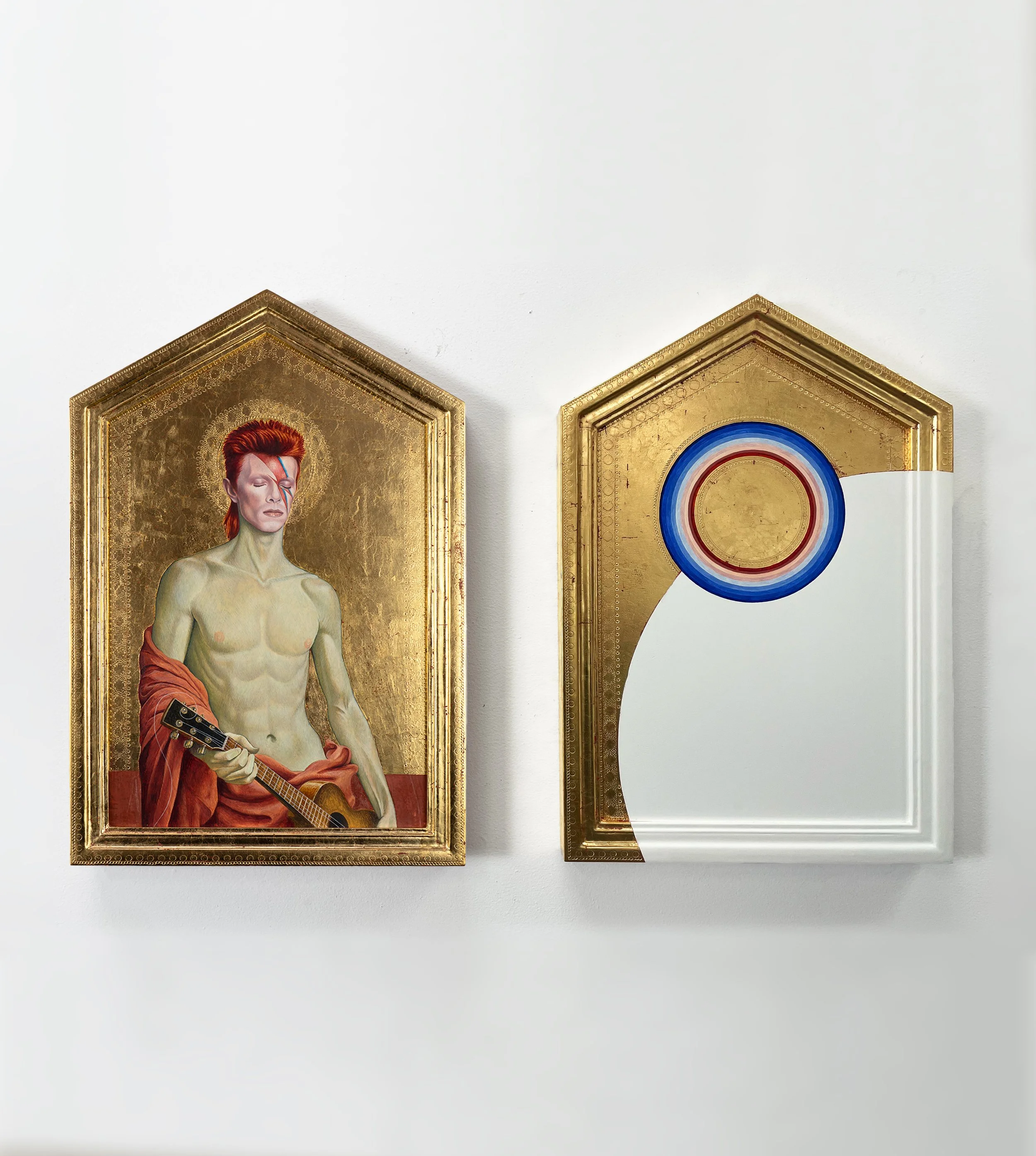
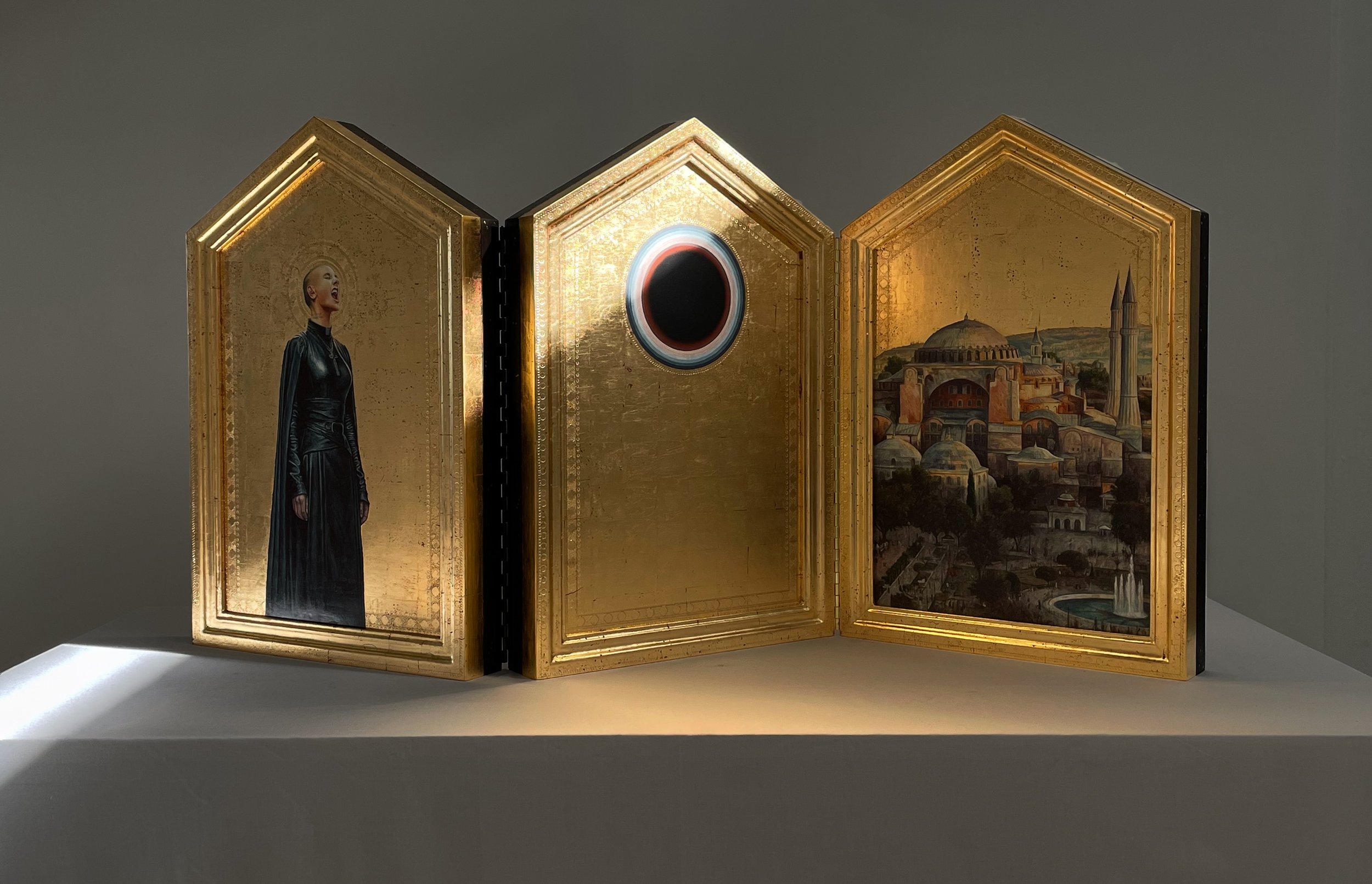
How to Reappear Completely is a new body of work developing from Giles Alexander PhD research, investigating late medieval devotional aesthetics and Music Evoked Autobiographical Memories. The title references Radiohead's haunting millenarian meditation on absence, memory and selfhood, influenced by Doug Richmond’s 1996 book titled ‘How to Disappear Completely and Never be Found.’
For artist and researcher Alexander, the phrase evokes a personal journey catalysed by emigration from England to Australia at the turn of the millennium, leaving behind family, landscape and cultural inheritance in pursuit of a new life. It reflects a reorientation to the art world after fifteen years of international exhibiting, creating space for contemplative practice-led doctoral research into two lifelong passions: medieval devotional art and Music. Most profoundly, it acknowledges the universal experience of disappearance and reappearance through the passing of loved ones, the fluctuation of memories, the mortality and idolisation of cultural icons, and the gradual erosion of traditions that once helped us understand who we are.
At a moment when images proliferate endlessly yet with ever diminishing permanence, Alexander turns toward one of the oldest and most demanding traditions of picture-making. Constructed through historically informed techniques derived from trecento Sienese art, each work emerges from months of labour, built upon years of slowly accrued expertise: hand-prepared gesso, traditional pigments, bole, water-gilded 24 karat gold leaf and meticulously glazed layers of oil paint. In an era increasingly characterised by acceleration, dematerialisation and AI image generation, such processes become more than technical choices. They are assertions of presence. The paintings insist upon the continuing value of attention, skill, material knowledge and embodied human experience
Developed through the theoretical framework of Music-Evoked Autobiographical Memories, the exhibition explores how music can activate personal memory while simultaneously carrying collective cultural meaning, transforming music that has shaped Alexander's inner life into contemporary devotional objects. These icons are neither celebrities nor saints, but something that exists between the two: cultural companions whose songs become repositories for memory, grief, belonging and the social conscience. Their music reappears to us even as bodies age and disappear. Through these paintings, the fleeting and immaterial experience of remembered sound is given physical form, translated into objects of permanence and reflection.
For more than two decades Alexander has consistently resisted the conventions of artistic signature and market predictability, directing his formidable technical skill toward continued exploration over stylistic branding. Exhibiting with leading galleries in London, New York, Miami, Hong Kong, Sydney and Melbourne and attracting patrons including Sting and Trudie Styler, he has remained committed to artistic autonomy. This new work represents the latest expression of that commitment, and the culmination of half a century of making: A practice-led investigation into music and memory, realised through the aesthetics of late medieval devotion and informed by a distinctly punk refusal to accept cultural amnesia as progress.